What Your Gut is Hiding: How Hidden Overgrowths Are Steering Your Health Imagine sitting down…
When AI Gets Your Health Question Right and Still Gets It Wrong

I use AI in my medical practice almost every day.
ChatGPT, and others. It’s genuinely useful. And I’m a fan of my patients using it too, coming to appointments with better questions, more context, a clearer sense of what they’re trying to understand.
But I want to tell you about two situations where the answers AI gave were smart, logical, well-reasoned, and still would have led to the wrong outcome for the patient.
Not because AI is bad. Because in biology, context changes everything.
📺 Watch: When AI Health Advice Sounds Right but Misses the Context
The People This Happens To

Both of these examples come from real patients of mine. Fully anonymous, but very representative of the kinds of people I work with.
Highly motivated. Intelligent. Actively trying to do the right thing for their health. Asking good questions. And like a lot of people now, using AI tools to help make sense of complex information, which makes complete sense. There is more health information available today than any one person can reasonably process.
The problem isn’t the questions they asked. The problem is that health isn’t just about having answers. It’s about knowing which answers actually apply to you.
AI is excellent at pattern recognition. It synthesizes enormous amounts of information quickly and it sounds very confident doing it. In both of these cases, the answers were not absurd. They weren’t reckless. They were incomplete.
And that’s where medicine, whether it’s rushed clinical care or AI, often falls short. It looks at pieces instead of systems. And biology doesn’t work in pieces.
The real limitation: AI can tell you what is generally true. It cannot always tell you what is true for your body, your history, your current state, and your specific moment in time. That gap is where outcomes diverge.
Example One: NAC, Bone Broth, and a Wired, Overstimulated Patient

This first case involved a patient who is extremely sensitive to supplements. Very reactive. Easy to overstimulate.
During a conversation with an AI assistant, a suggestion came up that combining NAC with bone broth could support NAD pathways. On the surface, that sounds intelligent, especially delivered with confidence.
Here’s what it missed.
Glutathione is like the body’s cleanup crew. It neutralizes oxidative stress and keeps the internal environment stable. NAC plus bone broth supports that cleanup crew. It helps your body produce more glutathione.
NAD is something different entirely. NAD is more like the cell’s electrical currency. It’s what allows your mitochondria to keep energy moving, to keep the lights on.
One cleans up the mess. The other powers the system. They are related, but they are not the same thing.
Yes, improving glutathione can indirectly help preserve NAD, because when the body is under high oxidative stress, it burns through NAD faster. But preserving NAD is not the same as building NAD. And pushing NAD precursors directly in this particular patient made him feel awful. Wired. Overstimulated. Dysregulated.
This wasn’t toxicity. It was overstimulation relative to his body’s ability to buffer it.
The AI didn’t give a reckless answer. The context changed the meaning of the answer entirely.
NAC plus bone broth does not equal NAD support. NAC plus bone broth is much more likely to upregulate your body’s production of glutathione. These are different pathways with different effects, and in a sensitive individual, that distinction is the whole ballgame.
Example Two: A Bone Lab That Looked Fine and Wasn’t
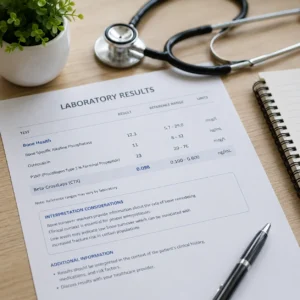
This example is about bone health.
There’s a particular lab marker that measures how quickly bone is being broken down and rebuilt. I’ll often run this in patients over 50 or 60. Lower numbers are frequently labeled as good. And if you asked an AI to interpret a low number in isolation, it might reasonably say that less breakdown is a positive sign.
Here’s what that interpretation misses.
Bone is a living tissue. In a healthy person, your entire skeleton turns over roughly every seven years. Old bone is constantly being removed and new bone is constantly being built. That renewal process is exactly how bone stays strong. The breakdown is not the problem. The breakdown followed by rebuilding is the point.
So in older adults, particularly those who are less active, have low protein intake, have low hormones, or have been on long-term bone medications, turnover can become too slow. Too suppressed. And when that happens, bone can actually become more brittle even when the numbers look reassuring. The micro-stresses that normally trigger rebuilding never get the chance to do their job.
A very low bone turnover marker is not automatically good news. Bone health is not about stopping breakdown. It is about healthy renewal.
Reasonable interpretation by the AI. Missing context completely.
Asking AI “is this a good lab number?” will often get you a reasonable general answer. But lab values only make sense within the full picture of the person, their history, their medications, their lifestyle, and their trajectory over time.
The Bigger Pattern

Large language models are excellent at recognizing patterns, synthesizing information, and explaining concepts clearly.
I use them that way myself. If I’m writing a patient portal message and my wording isn’t landing the way I want it to, I’ll sometimes ask ChatGPT to help me phrase it in plain language. Then I re-read it carefully to make sure the output is actually accurate, because it isn’t always.
People often describe AI as a very smart intern. I’d push back on that. AI is probably more like the smartest doctor you’ve ever encountered. And in six to twelve months, it may be smarter than any doctor who has ever lived.
But we’ve all probably experienced the brilliant physician who gives technically correct information that lands with a complete thud. Someone so focused on the answer that they’ve completely lost the human in front of them. What they said might have been accurate. But it wasn’t right for that person, in that moment, at that stage of their life.
That’s still the risk when intelligence, artificial or otherwise, isn’t grounded in context.
Biology doesn’t shout. It whispers. And if you’re only listening to AI and its fluency, you’ll miss the quiet physiological signal. Because biology isn’t just information. It’s timing. It’s thresholds. It’s tolerance. And it’s the individual in front of you.
How I actually use AI: Not to make decisions. Not to generate health recommendations that just sound smart. I use it to explore possibilities, pressure-test my own thinking, and explain concepts. Then I filter everything through physiology, experience, and the individual in front of me. That’s the sequence that works.
What This Means If You’re Using AI for Your Health
Use it to ask better questions. Not to outsource your discernment.
AI can help you understand what a lab marker generally means. It can explain a mechanism, summarize a study, or help you figure out what to ask your doctor. Those are genuinely valuable things.
What it cannot do is know your body, your history, your current physiological state, and how all of those things interact in this particular moment.
Your body is not an algorithm. Context changes everything.
Use AI wisely.
The standard AI can’t access: Your individual history. Your current stress load. Your medication interactions. Your hormonal status. Your mitochondrial capacity. Your pattern over time. These are the variables that determine whether a generally correct answer is actually right for you.
Curious What’s Blocking Your Vitality?
Take the free RoVive Assessment (3 to 5 minutes) and discover:
- What’s draining your energy, focus, or resilience
- Your number one roadblock to feeling your best
- A personalized next step plus immediate FREE video guidance
Zero cost. Easy. No pressure. Just clarity.
Work With Dr. Yoshi Rahm
If you’re ready for a thoughtful, individualized approach to your brain health and want long term clarity over quick fixes:
📩 Email: Support@RoViveMethod.com
Who this is for: People who are thoughtful, responsible, and invested in understanding what’s actually going on in their body. Sometimes quick improvements are possible. But sustainable change comes from understanding the root of what’s happening and doing it in the right order.
Medical Disclaimer
𝖳𝗁𝗂𝗌 𝖼𝗈𝗇𝗍𝖾𝗇𝗍 𝗂𝗌 𝖿𝗈𝗋 𝖾𝖽𝗎𝖼𝖺𝗍𝗂𝗈𝗇𝖺𝗅 𝖺𝗇𝖽 𝗂𝗇𝖿𝗈𝗋𝗆𝖺𝗍𝗂𝗈𝗇𝖺𝗅 𝗉𝗎𝗋𝗉𝗈𝗌𝖾𝗌 𝗈𝗇𝗅𝗒. 𝖨𝗍 𝗂𝗌 𝗇𝗈𝗍 𝗆𝖾𝖽𝗂𝖼𝖺𝗅 𝖺𝖽𝗏𝗂𝖼𝖾, 𝖽𝗂𝖺𝗀𝗇𝗈𝗌𝗂𝗌, 𝗈𝗋 𝗍𝗋𝖾𝖺𝗍𝗆𝖾𝗇𝗍. 𝖵𝗂𝖾𝗐𝗂𝗇𝗀 𝗍𝗁𝗂𝗌 𝖼𝗈𝗇𝗍𝖾𝗇𝗍 𝖽𝗈𝖾𝗌 𝗇𝗈𝗍 𝖾𝗌𝗍𝖺𝖻𝗅𝗂𝗌𝗁 𝖺 𝖽𝗈𝖼𝗍𝗈𝗋–𝗉𝖺𝗍𝗂𝖾𝗇𝗍 𝗋𝖾𝗅𝖺𝗍𝗂𝗈𝗇𝗌𝗁𝗂𝗉 𝗐𝗂𝗍𝗁 𝖣𝗋. 𝖸𝗈𝗌𝗁𝗂 𝖱𝖺𝗁𝗆, 𝖣𝖮, 𝗈𝗋 𝖱𝗈𝖵𝗂𝗏𝖾, 𝖯𝖢, 𝗈𝗋 𝖺𝗇𝗒 𝖺𝖿𝖿𝗂𝗅𝗂𝖺𝗍𝖾𝖽 𝖾𝗇𝗍𝗂𝗍𝗒. 𝖬𝖾𝖽𝗂𝖼𝖺𝗅 𝖽𝖾𝖼𝗂𝗌𝗂𝗈𝗇𝗌 𝗌𝗁𝗈𝗎𝗅𝖽 𝖻𝖾 𝗆𝖺𝖽𝖾 𝗐𝗂𝗍𝗁 𝗒𝗈𝗎𝗋 𝗈𝗐𝗇 𝗅𝗂𝖼𝖾𝗇𝗌𝖾𝖽 𝗁𝖾𝖺𝗅𝗍𝗁𝖼𝖺𝗋𝖾 𝗉𝗋𝗈𝖿𝖾𝗌𝗌𝗂𝗈𝗇𝖺𝗅, 𝗐𝗁𝗈 𝖼𝖺𝗇 𝖺𝗌𝗌𝖾𝗌𝗌 𝗒𝗈𝗎𝗋 𝗂𝗇𝖽𝗂𝗏𝗂𝖽𝗎𝖺𝗅 𝗁𝗂𝗌𝗍𝗈𝗋𝗒, 𝖼𝗈𝗇𝖽𝗂𝗍𝗂𝗈𝗇𝗌, 𝖺𝗇𝖽 𝗇𝖾𝖾𝖽𝗌. 𝖣𝗈 𝗇𝗈𝗍 𝖽𝖾𝗅𝖺𝗒, 𝖽𝗂𝗌𝗋𝖾𝗀𝖺𝗋𝖽, 𝗈𝗋 𝗌𝗍𝗈𝗉 𝗆𝖾𝖽𝗂𝖼𝖺𝗅 𝖼𝖺𝗋𝖾 𝖻𝖺𝗌𝖾𝖽 𝗈𝗇 𝗍𝗁𝗂𝗌 𝖼𝗈𝗇𝗍𝖾𝗇𝗍. 𝖨𝖿 𝗒𝗈𝗎 𝖺𝗋𝖾 𝖾𝗑𝗉𝖾𝗋𝗂𝖾𝗇𝖼𝗂𝗇𝗀 𝖺 𝗆𝖾𝖽𝗂𝖼𝖺𝗅 𝖾𝗆𝖾𝗋𝗀𝖾𝗇𝖼𝗒, 𝖼𝗈𝗇𝗍𝖺𝖼𝗍 𝖾𝗆𝖾𝗋𝗀𝖾𝗇𝖼𝗒 𝗌𝖾𝗋𝗏𝗂𝖼𝖾𝗌 𝗂𝗆𝗆𝖾𝖽𝗂𝖺𝗍𝖾𝗅𝗒.
Related Posts